Form Factor Study: Iterative Physical Design for Consumer-Facing Embodied AI
Five build-and-test cycles. Multiple cohorts. One question: can we design a physical form that humans will accept?
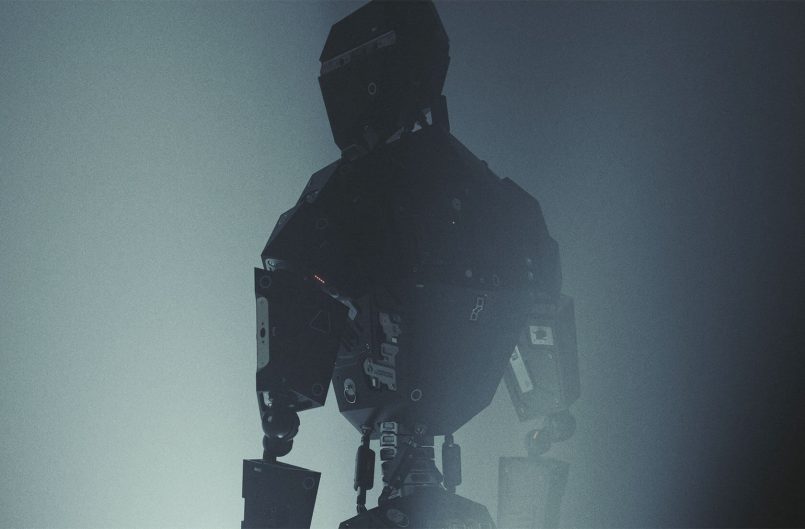

Early last year I commissioned our physical systems team with a challenge that I suspect some of them thought was premature. The timing was deliberate. We had been building Maya as a software system for long enough that the decisions we were making in architecture and interaction design were beginning to presuppose a physical form. I wanted to test those presuppositions before they hardened into assumptions that would take two years to reverse.
The challenge was straightforward in its framing, if not in its execution: take the alpha design, build it, test it with humans, and iterate until you have something that works. Not a render. Not a simulation. A physical object in a room with a person, with structured observation and honest measurement of what happens.
The scope boundaries were explicit. Core actuation systems, perception stacks, and software architecture were out of scope — those are separate workstreams at separate stages of maturity. The challenge was form factor only: geometry, proportion, surface treatment, and the behavioral legibility that emerges from all three. We were testing whether the physical shell we had converged on in design would survive contact with real humans.
The Alpha Baseline
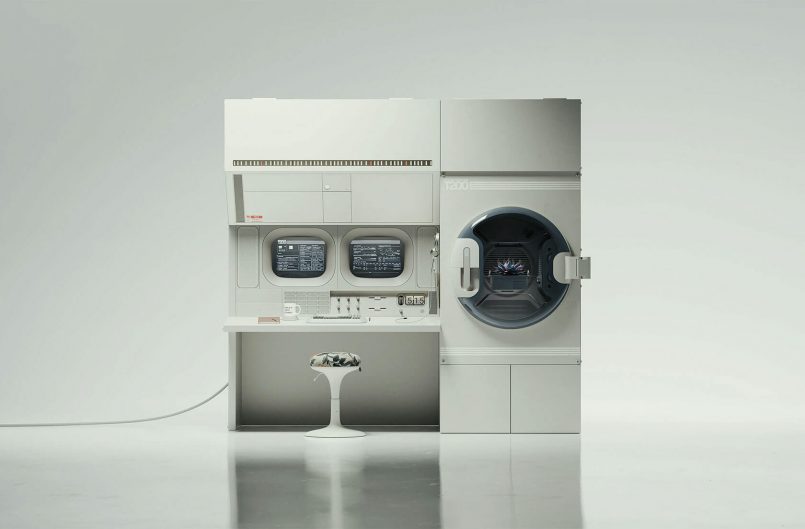
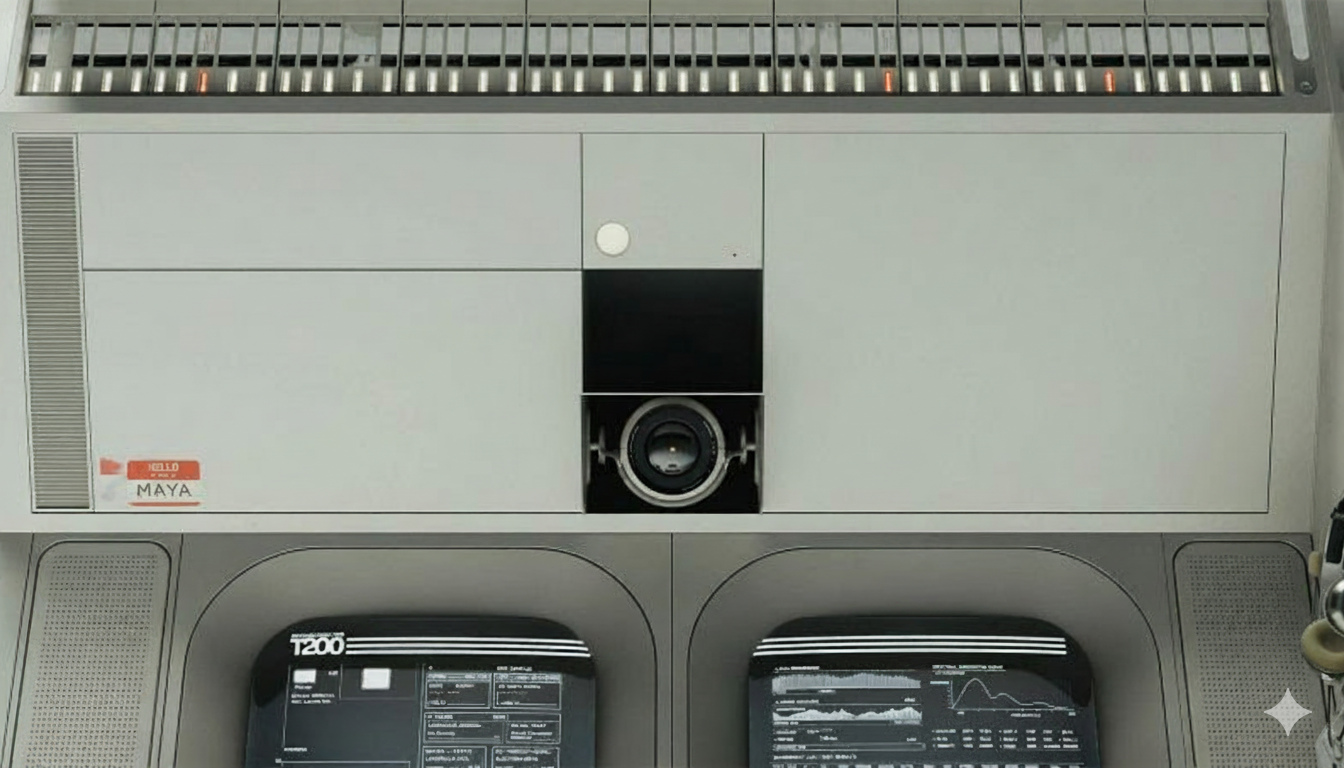
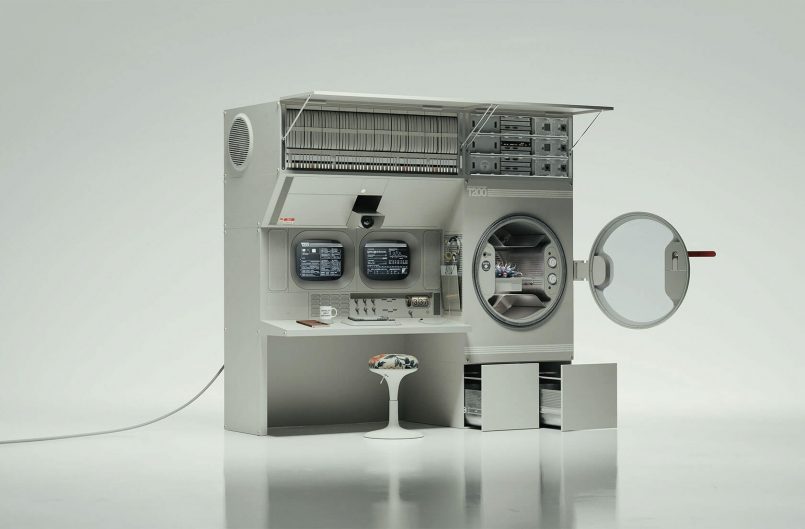
Fig. 1 — The Alpha Baseline. Pre-challenge state. Engineering-first geometry, no form-factor optimization for human-facing deployment.
Our alpha design was exactly what you would expect from a team that had been living in software: a formal expression of capability rather than a form-factor hypothesis. Proportions were derived from utility — sensor placement requirements, actuation envelope geometry, structural load paths. It looked like what it was: a first-principles engineering sketch realized in fabricated material.
We brought the alpha unit into three preliminary focus sessions with participants who had no prior exposure to the project or the company. The findings were consistent across cohorts. The alpha read as industrial. Without exception, participants described it as something that belonged in a logistics context, a manufacturing floor, or a research facility. No one described it as something they would want in their home, would feel comfortable using on a regular basis, or would trust with a task that involved close physical proximity.
The form factor was producing the wrong affordance signal before the unit had performed a single function. That was the input to the design challenge. The team's mandate was not to re-engineer the underlying system. The mandate was to solve the form problem — through iteration, physical construction, and real human feedback — with each cycle producing a built prototype that went into a room with focus group participants and was observed under structured and unstructured conditions.
Mechanical Honesty
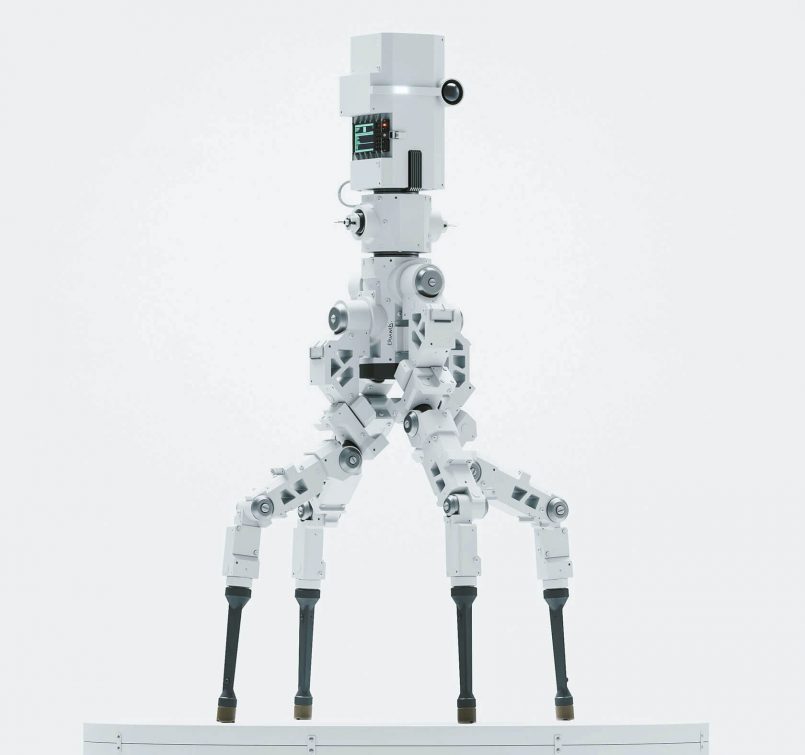
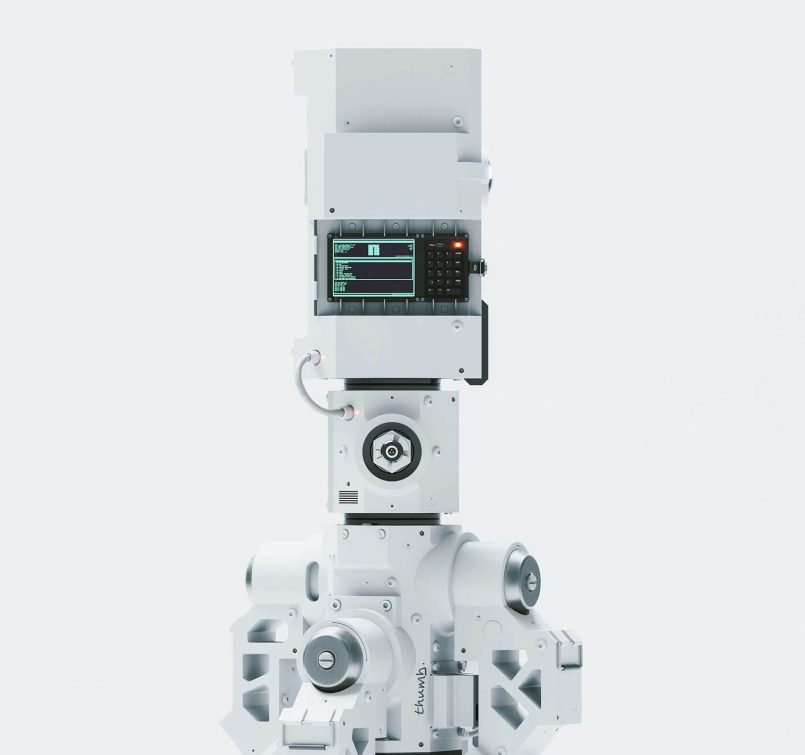
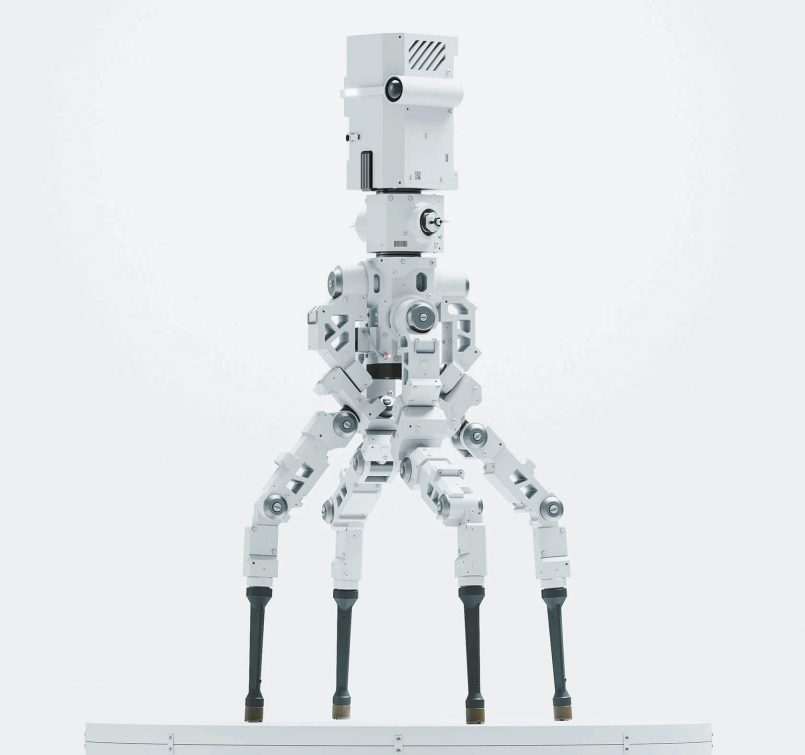
Fig. 2 — Mechanical Honesty. Full view, head module, and side profile. Near-final form geometry; kinematic integration resolved across upper assembly.
The team's first instinct was sound: strip the design back to its kinematic logic and rebuild the exterior geometry from the inside out. The argument was that any surface treatment added over an unresolved kinematic chain would eventually produce an incoherent result — the geometry would fight the motion, and participants would perceive the conflict even if they couldn't name it. I agreed with the reasoning, and the first prototype reflected this philosophy directly.
The results from focus group one were instructive in ways that were both expected and not. Mechanically, the prototype performed well within its tested range of motion. Focus participants given structured tasks to complete alongside the unit showed reasonable task acceptance rates — they could follow the interaction protocol, manage the physical proximity the task required, and complete the objective. That was the good news.
Unstructured exposure told a different story. When participants were simply left in a room with the unit without a defined task, most moved to maximize distance. Several reported discomfort they struggled to articulate — which is a reliable indicator of proximity to the uncanny valley, the well-documented perceptual valley where human-likeness without sufficient fidelity produces unease rather than familiarity. The unit was producing the right behavior but the wrong legibility.
The form was not communicating intent in a way that felt safe to a naive observer. When a participant cannot read what a system is about to do, they default to threat-avoidance. That default is what we were seeing. The mechanical-honesty approach had produced a unit that was coherent to an engineer and opaque to everyone else.
Softening the Signal
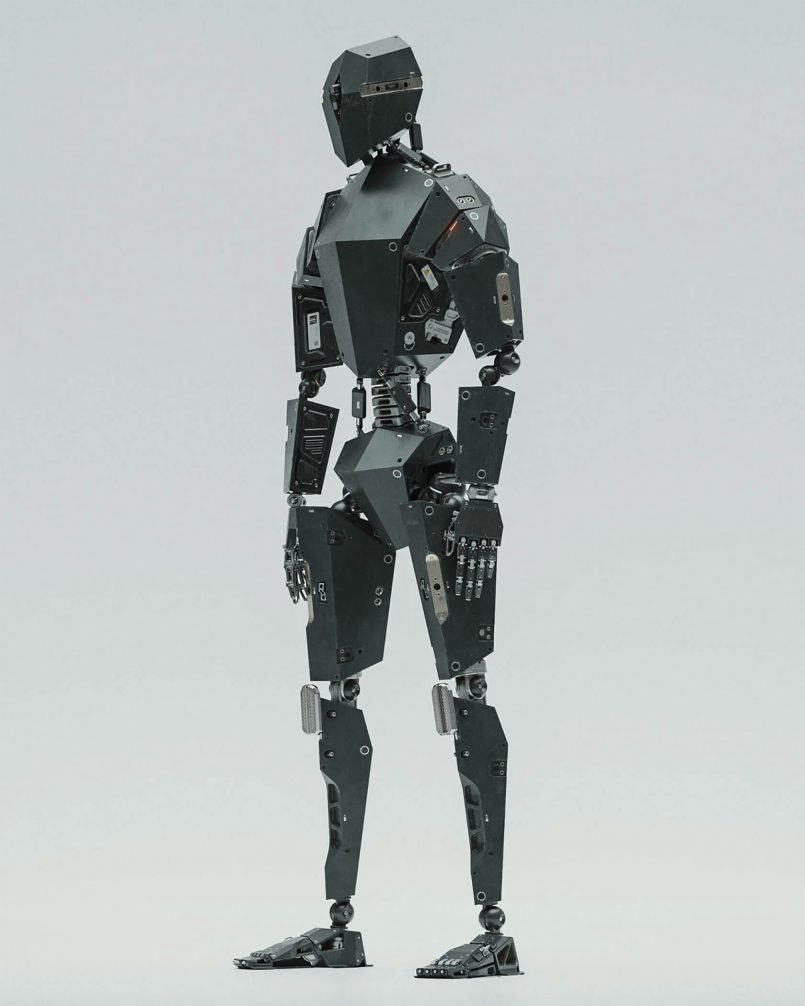
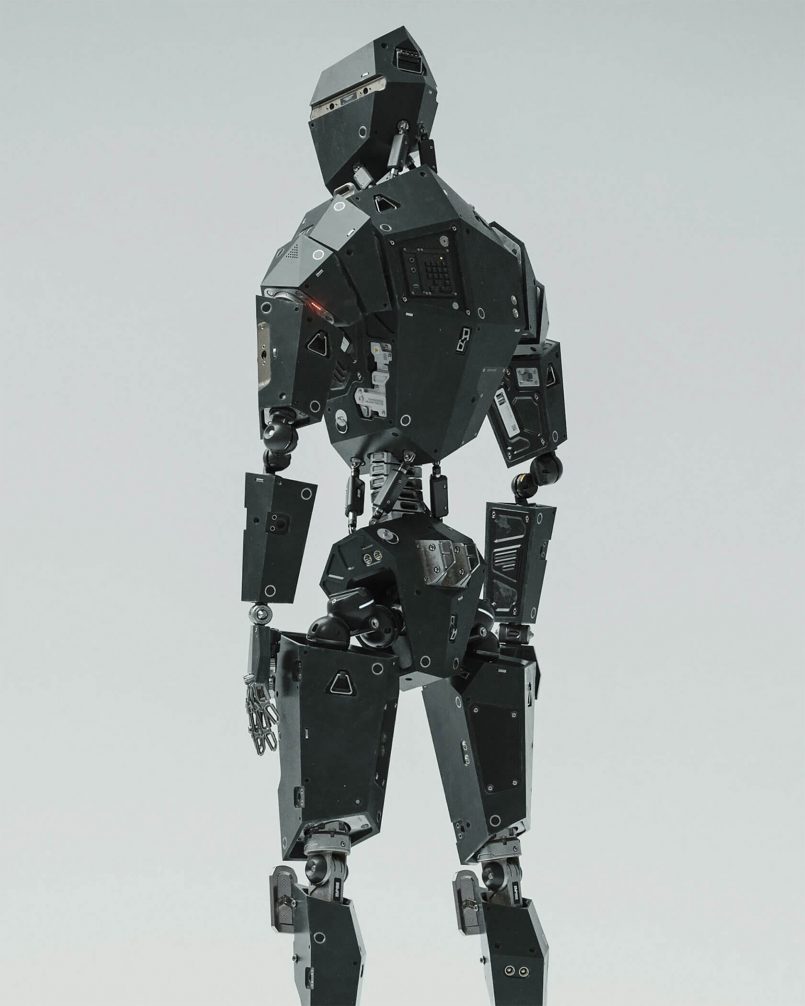
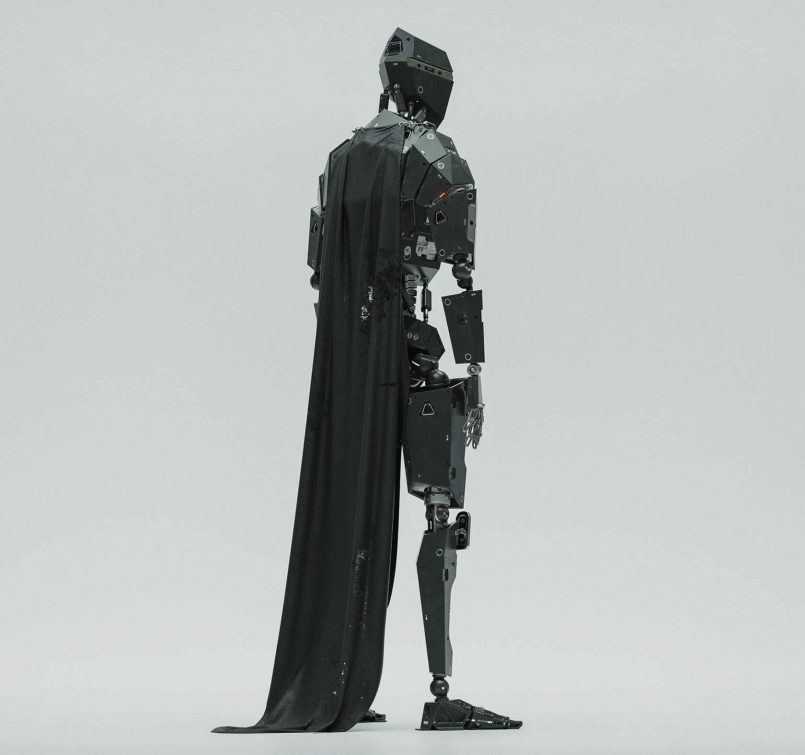
Fig. 3 — Softening the Signal. Front angle, rear profile, rear with cover panel. Surface treatment introduced; head module redesigned around affordance-signal model.
The second iteration addressed the legibility problem directly. The team worked through what I would characterize as a morphological refinement cycle — systematically testing how changes to surface continuity, joint cover geometry, and head-to-body proportion affected observer response before committing to fabrication. This was slower than the first round, and it was the right call.
The resulting prototype took a meaningfully different approach to surface treatment. Edge geometry softened throughout the upper assembly. The head module was redesigned around a proportional model informed by perceived-affordance research: forms that signal attentiveness without triggering the threat-response heuristics that fired consistently in round one. Cover panels were introduced to the rear assembly — not for aesthetic reasons, but because exposed mechanical structures in the dorsal zone produced specific avoidance behaviors that the team had tracked carefully across focus group one.
The unit's presence in the room began to generate qualitatively different language from participants. Words like "curious" and "intentional" appeared in session notes for the first time. Measured comfort distances in unstructured conditions decreased — participants were willing to stand closer, and were initiating proximity rather than avoiding it. The affordance signal was working.
The failure mode in iteration two was locomotion. The revised upper assembly had shifted the mass distribution enough that the locomotion system was operating outside its optimized range. Participants described the gait as "hesitant" and "uncertain." This is a documented phenomenon in HRI research: perceived locomotor confidence is a primary driver of platform acceptance in mobile systems. A unit that moves with apparent uncertainty triggers protective instincts rather than cooperative ones. We had solved the legibility problem and introduced a new one.
Convergence Under Load
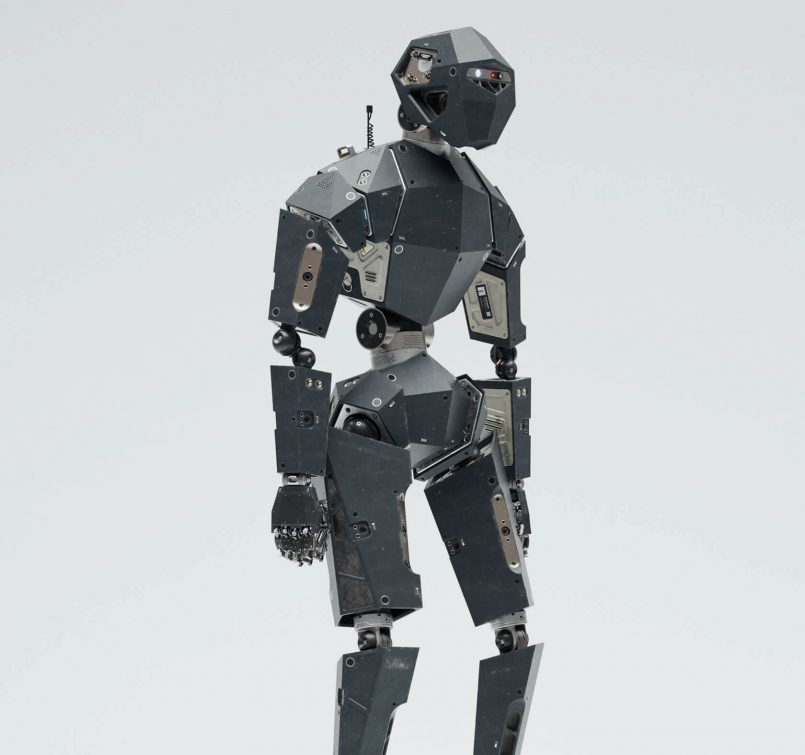
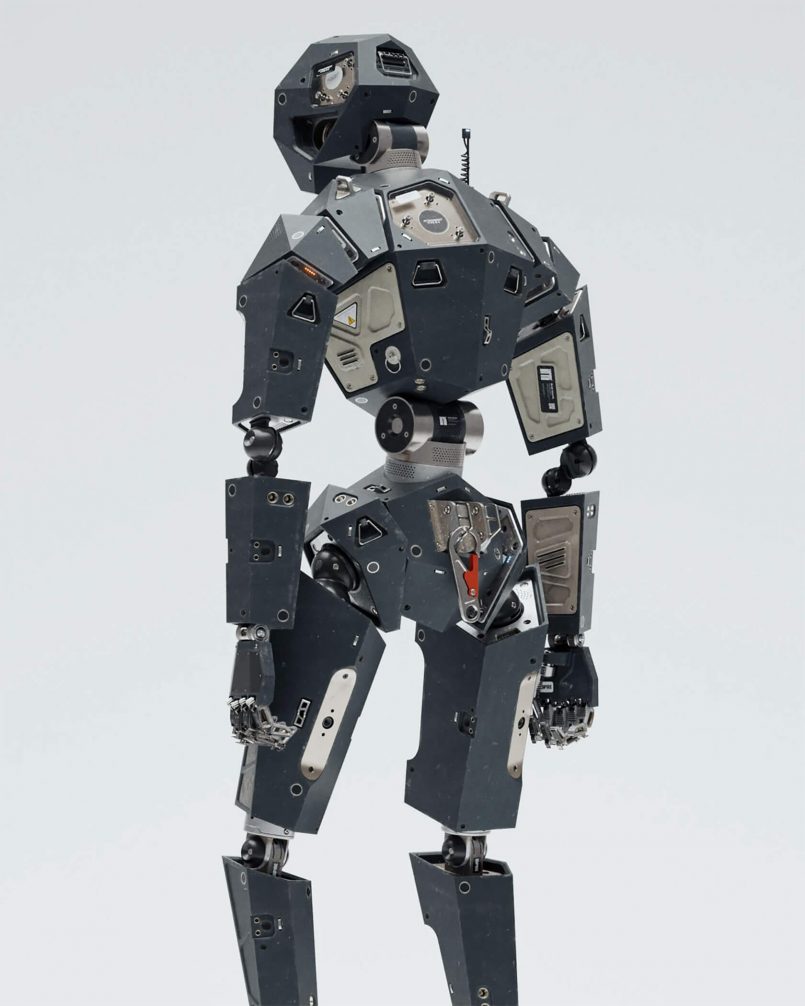
Fig. 4 — Convergence Under Load. Front angle and revised head assembly. Concurrent development cycle; 03 resolved locomotion stability, 04 pursued head module geometry revision.
The third and fourth prototypes were developed concurrently — a deliberate departure from the linear cadence of the earlier rounds. By this point the design parameter space had narrowed enough that we could run two parallel hypothesis tests without generating confounding data. Prototype 03 prioritized resolving the locomotion stability issue under the new mass distribution. Prototype 04 pursued a revised head assembly geometry, holding the iteration-02 body as a fixed variable. Each team was testing one thing, and we could compare outcomes cleanly.
Focus group data from these rounds showed convergence. Participant responses were becoming more consistent — less variance across individuals, more predictable ranges of comfort distance, more stable task acceptance scores. We were no longer discovering fundamentally new failure modes. We were refining solutions to failure modes we had already characterized.
We also ran the first environmental condition sessions during this phase — observations outside controlled lab environments, in varied lighting and spatial conditions. The unit held behavioral consistency across conditions that would have exposed brittle performance in earlier iterations. That environmental robustness was a confidence signal we needed before moving to the fifth round.
The 03-04 round produced our first positive data on extended-presence acceptance. Participants who interacted with the unit for extended periods in unstructured settings showed comfort levels that held steady or improved over time. Earlier iterations had shown degradation — the unit became less acceptable the longer someone spent with it, which is a fundamental disqualifier for a companion-class deployment. That pattern had reversed. The form was beginning to pass what I call the durability test: it was acceptable not just on first encounter, but after the novelty wore off and participants were responding to the unit as an ordinary presence.
Near-Final State

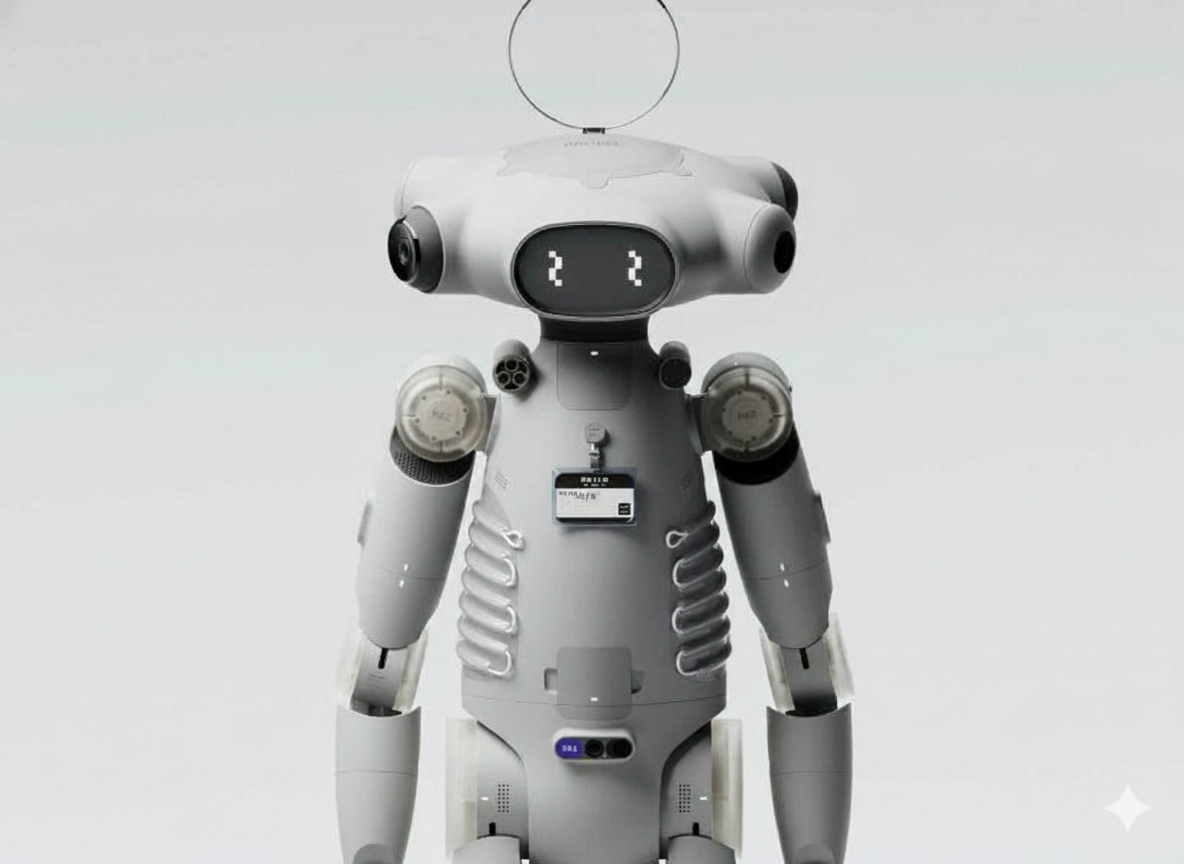
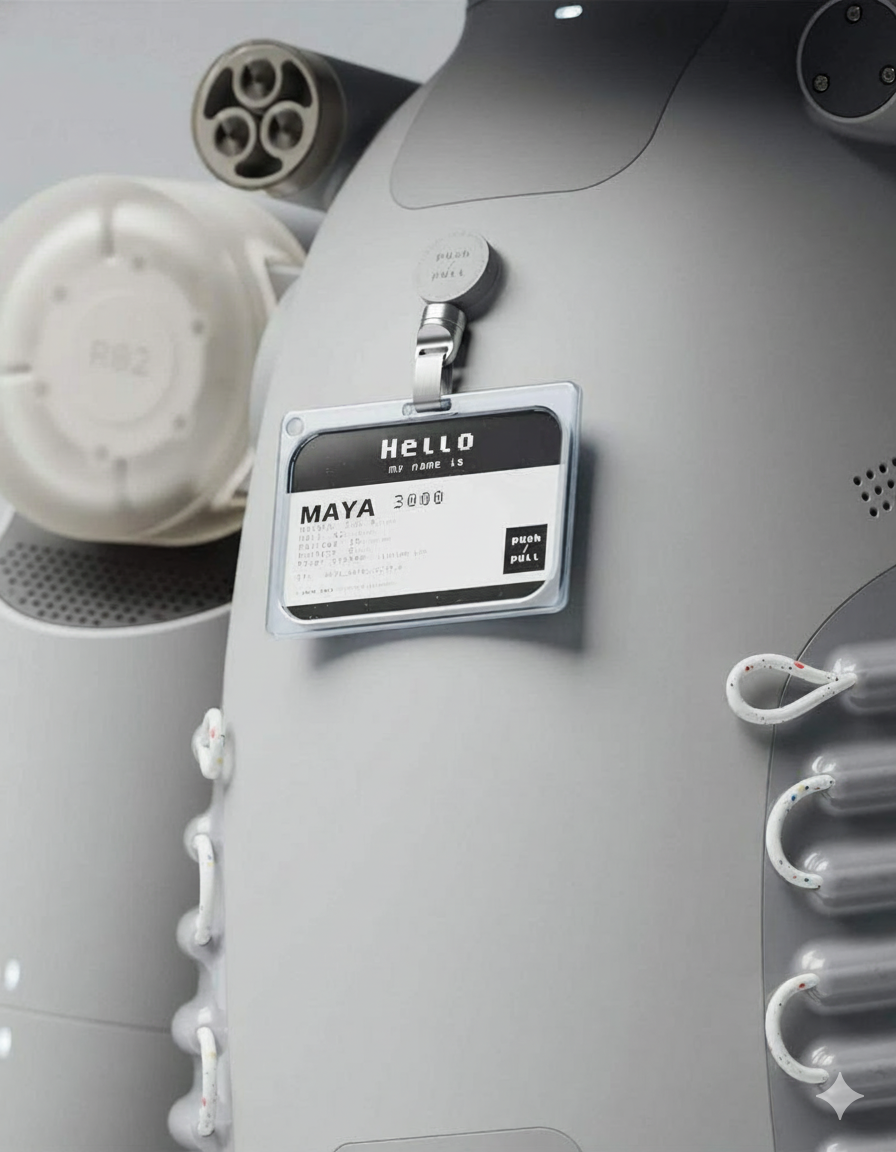
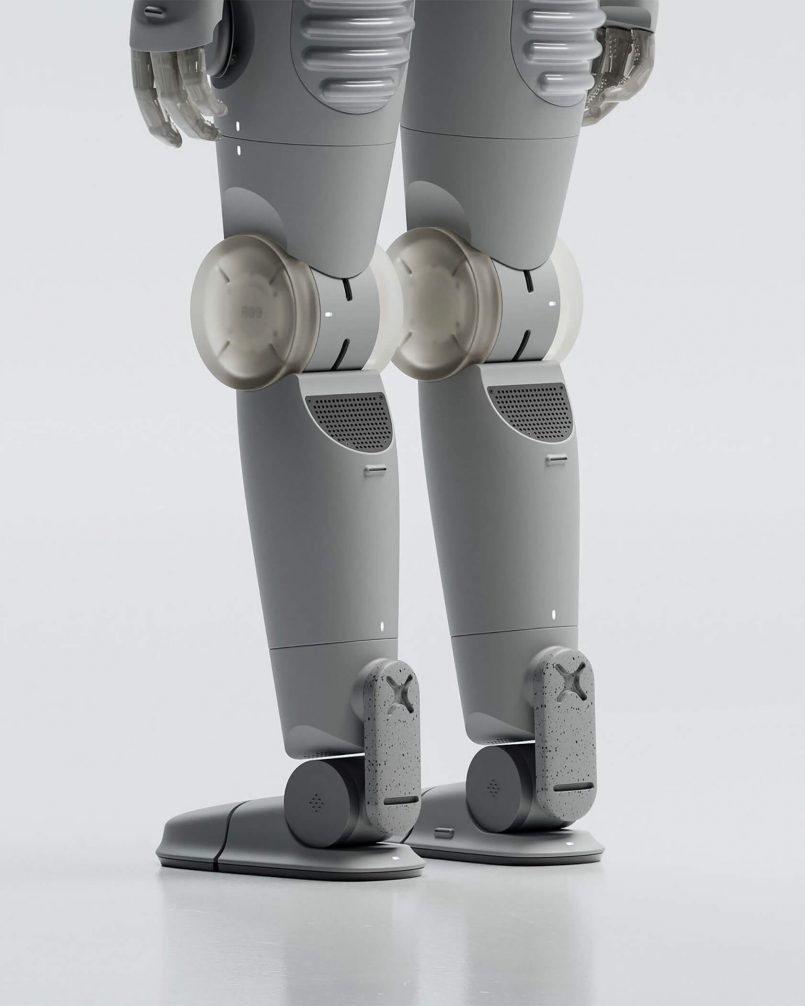

Fig. 5 — Near-Final State. Front, head module, chest module, and rear assembly views. Current near-final state; kinematic chain resolved across all assemblies.
The fifth prototype represents the current state of this physical design program. It is not a production design. It is a research artifact that has, through five build-and-test cycles, earned the right to inform the production design process with data rather than assumptions.
Acceptance metrics in focus group five were the strongest we have recorded across all cohorts. Participants showed markedly reduced avoidance behavior in unstructured conditions. Task completion rates in directed scenarios exceeded our target thresholds across all participant demographic segments. Comfort distance measures in unstructured exposure settled at ranges consistent with what the HRI literature describes as the "social zone" — the same proxemic envelope humans use with service staff in familiar environments.
Several participants in round five, when asked to describe the unit in their own words, used language centered on personality and intention rather than mechanism. That is a significant shift from round one, where participants consistently described what they saw in mechanical and functional terms. When people perceive a system's form and behavior as expressive rather than operational, you have crossed a threshold that cannot be faked. It has to be earned through the geometry.
The challenge was never to build the most sophisticated mechanism. The challenge was to build something that humans accept — willingly, without instruction, across a range of settings and demographic profiles. We are closer to that result than I expected to be at this stage of the program.
What This Tells Us About 2030
I want to be precise about what these prototypes are and are not. They are form-factor research instruments. They are not production candidates, and they will not become production candidates. The gap between a fifth-iteration research prototype and a unit ready for consumer deployment involves engineering work across actuation systems, perception, power, materials, and manufacturing that is well beyond the scope of what this challenge was designed to test.
What this study has established is the shape of the problem we are solving in physical design — and, more importantly, evidence that the problem is solvable. Maya in physical form is a 2030 milestone. The path from iteration 05 to a unit that can be manufactured at scale and deployed in a consumer environment involves years of parallel engineering development. That work is underway.
What was not yet known — and is now — is whether the physical form we are converging toward is one that humans will accept in the role we intend for her. Maya is being built as a consumer companion: a system that operates in ordinary environments, alongside ordinary people, doing work that has direct material consequence for the people it serves. The tolerance threshold for form factor errors in that deployment context is extremely low.
The answer, across five design iterations and multiple cohorts of participants with no prior exposure to this project, is yes. We have a form that works. We know what we are building toward. That is what I commissioned this challenge to establish, and the team delivered it.